How to Budget as a Couple Without Arguing
Couples almost never argue about the actual figure on a receipt. They argue because one person felt ambushed, or judged, or left out of a decision. The money is the trigger, not the cause, and that is good news, because a missing system is much easier to fix than a personality clash.
Start with the structure, not the spending
Before you set a single limit, decide how money moves through your household. There are really only three models, and most of the resentment in couple finances comes from never picking one deliberately.
| Model | How it works | Suits you if |
|---|---|---|
| Fully joint | Every pound or dollar lands in one account and all spending comes out of it | Incomes and habits are similar, and you both like total transparency |
| Shared pot plus personal accounts | A joint account funds bills and goals, each partner keeps a personal account | You want the essentials automated but still want autonomy |
| Fully separate | Each keeps their own accounts and settles shared costs between you | You have very different incomes, prior obligations, or came together later in life |
The middle option is the one most couples land on, and for good reason. Bills come out automatically so nobody has to chase anybody, and each partner still has money that requires no explanation to anyone. It removes the two most common flashpoints at once.
Whichever you pick, write it down. A shared note listing which account pays which bill takes ten minutes and prevents a year of small misunderstandings.
Fund the shared pot in proportion to income
This is the single change that ends the fairness argument.
If you split shared costs 50-50 when one partner earns far more, the lower earner is left with almost nothing discretionary while the higher earner has plenty. Both people are technically paying the same, and it still feels unfair, because it is.
Split by share of income instead. Add both net incomes together, work out what percentage each partner contributes, and fund the joint account in those proportions. If one partner brings in 65 percent of household income, they cover 65 percent of the rent, the utilities and the groceries. Each of you is then left with a comparable slice of your own income, which is the thing people are actually measuring when they say something is not fair.
Recalculate whenever an income changes materially, not every month.
Set a check in threshold and a no questions number
Two numbers do most of the work here.
The check in threshold. Agree an amount above which neither of you spends without a conversation first. For many households that is somewhere in the low hundreds. It is not permission and it is not a veto, it is a heads up, and it stops the "you spent what?" conversation from ever happening.
The no questions amount. Each partner gets a fixed monthly amount that is genuinely theirs, with no justification required, no matter how frivolous. This matters more than it sounds. The feeling of being audited on small purchases is what turns budgeting into a source of conflict rather than a tool. Make the amounts equal even when the incomes are not, because this money is buying autonomy rather than reflecting contribution.
Hold one money meeting a month
Almost every money argument happens at the worst possible moment: when a card is declined, when a statement arrives, or when someone is already tired. Scheduling the conversation fixes that.
Put 30 minutes in the calendar once a month and work through the same short agenda every time:
- What came in and what went out last month, at category level rather than line by line
- Any bill that has quietly gone up, and whether it is worth switching or renegotiating
- Anything large coming up in the next 60 days, so nothing is a surprise
- Progress on the shared goals, whether that is an emergency fund, a deposit or a holiday
- One thing each of you wants to change
Two rules make it work. Look at the numbers together on a screen rather than one person presenting to the other, and treat the spending as the household's rather than any individual's. The CFPB in the US, MoneyHelper in the UK and the Financial Consumer Agency of Canada all publish free budget planners you can fill in side by side, which is a useful way to keep the meeting about the figures rather than about each other.
Agree the goals before the limits
Budgets fail when they are pure restriction. They hold when both partners can name what the restriction is buying.
Sit down and each write your top three financial goals separately, then compare. Couples are usually surprised by two things: how much overlap there is, and how differently they rank the same items. One partner may want a house deposit above everything, the other may want the emergency fund full first. Neither is wrong, and the discovery is the point.
Pick two or three shared goals, put a number and a rough date on each, and set up an automatic transfer on payday. Automating the goal before the spending is what makes the rest of the budget self-enforcing.
The couple specific money you may be leaving behind
Being a couple changes your tax position, and the rules differ sharply by country. These are worth checking once a year.
United States. Your filing status is a genuine decision, not a formality. Married Filing Jointly and Married Filing Separately produce different outcomes depending on your incomes, deductions, medical expenses and student loan repayment plans. IRS Publication 501 sets out the rules for each status. It is usually worth modelling both before you file.
United Kingdom. Marriage Allowance lets a spouse or civil partner who earns below the Personal Allowance transfer part of it to a partner who pays basic rate tax, cutting the couple's overall bill. Claims can generally be backdated for several tax years, so if you have never claimed it, check now. Also remember that ISA allowances are individual, so a couple has two of them, and that the High Income Child Benefit Charge is assessed on the higher earner rather than on joint income.
Canada. Marital or common law status changes how several benefits are calculated, because credits such as the Canada Child Benefit and the GST/HST credit are based on family net income rather than individual income. On the planning side, spousal RRSPs and pension income splitting for eligible pension income both exist to move income toward the lower-earning partner. TFSA room is individual, so a couple has two allowances to fill.
Handle debt as a household, honestly
Debt one partner brought into the relationship is the conversation people postpone longest, and postponing it is what makes it explosive.
Get every balance, rate and minimum payment onto one page. That single act removes most of the anxiety, because vague debt always feels worse than counted debt. Then decide together whether it is a household problem or an individual one. Either answer works. What does not work is leaving it undecided, because the unspoken version tends to surface during an unrelated argument six months later.
Whatever you agree, keep both partners' names on the credit file conversation. In all three countries, credit histories are individual, and a partner who has never held credit in their own name can find themselves in a difficult position later.
The bottom line
Pick a structure, fund the shared pot in proportion to income, and agree two numbers: the amount above which you check in with each other, and the amount below which nobody has to explain anything. Then put one 30 minute meeting a month in the calendar. That combination handles the mechanics, and once the mechanics are handled, most of the arguing stops, because there is nothing left to ambush anybody with.
Frequently Asked Questions
Should couples combine finances completely?
There is no single right answer, and the research-backed advice from consumer regulators is simply to agree a system and write it down. Fully joint works when incomes and spending habits are similar. A shared pot for bills with personal accounts alongside it is the most popular middle ground because it covers the essentials automatically while leaving each partner autonomy.
How do you split bills when one partner earns much more?
Split in proportion to income rather than 50-50. If one partner brings in 65 percent of the household income, they cover 65 percent of the shared costs. Both partners then have a similar share of their own income left over, which is what actually feels fair day to day.
How often should couples talk about money?
Once a month is enough for most households. Put it in the calendar, keep it to about half an hour, and review last month's spending, this month's bills and any upcoming large purchases. Scheduled conversations are far less likely to turn into arguments than spontaneous ones.
Sources
Primary sources used for this guide. Last checked August 5, 2026.
- Budgeting: How to create a budget and stick with itUS Consumer Financial Protection Bureau
- Publication 501, Dependents, Standard Deduction, and Filing InformationUS Internal Revenue Service
- Marriage AllowanceGOV.UK
- Budget plannerMoneyHelper
- Making a budgetFinancial Consumer Agency of Canada
- Budget PlannerFinancial Consumer Agency of Canada
Keep reading
 Budgeting
How to Budget on an Irregular or Variable Income
A practical system for budgeting on a variable income: find your floor, pay yourself a steady salary, and stay ahead of tax bills in the US, UK and Canada.
Budgeting
How to Budget on an Irregular or Variable Income
A practical system for budgeting on a variable income: find your floor, pay yourself a steady salary, and stay ahead of tax bills in the US, UK and Canada.
 Budgeting
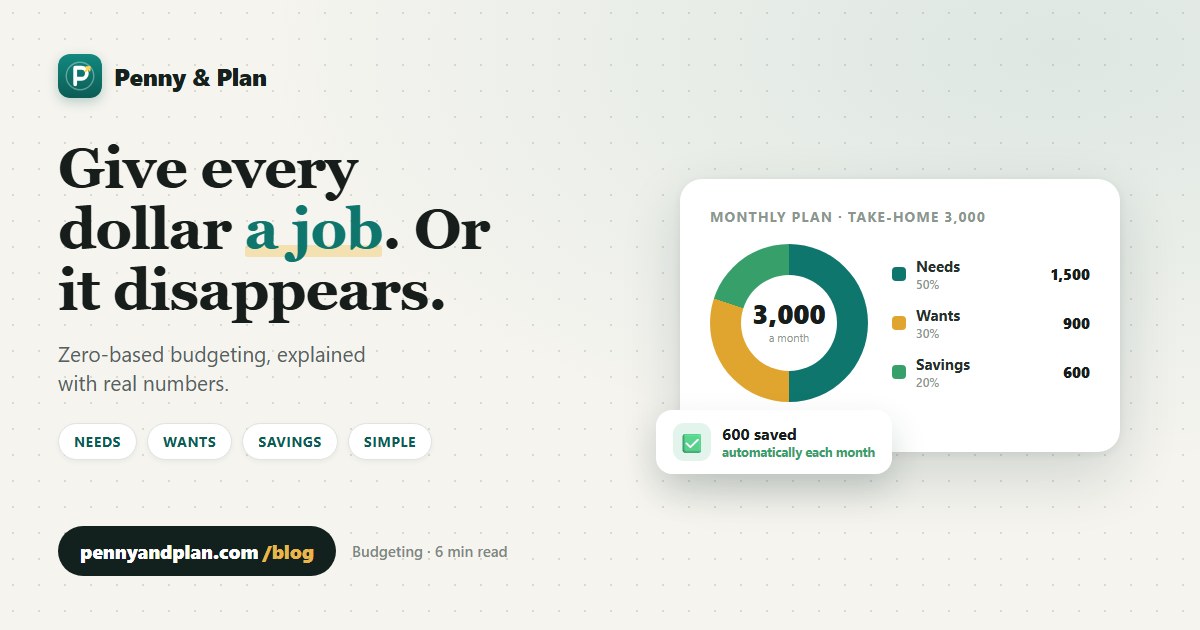
Zero-Based Budgeting Explained With Examples
How zero-based budgeting works, worked examples for steady and irregular income, and the free official tools that make it take an hour instead of a weekend.
Budgeting
Zero-Based Budgeting Explained With Examples
How zero-based budgeting works, worked examples for steady and irregular income, and the free official tools that make it take an hour instead of a weekend.
 Budgeting
How to Make a Monthly Budget (Step by Step)
A simple step-by-step guide to making a monthly budget that actually works, with an easy method for beginners and how to stick to it.
Budgeting
How to Make a Monthly Budget (Step by Step)
A simple step-by-step guide to making a monthly budget that actually works, with an easy method for beginners and how to stick to it.